Evolution of Balance Sitting: Why Balance Chair Is The New It (and Balance Ball Chair Is In The Past)
Prolonged sitting is a defining feature of modern work, yet most office chairs are designed for static support rather than movement. Even when sitting in a so-called “correct” posture, staying still for hours places sustained mechanical load on the body and reduces neuromuscular activity. Research in biomechanics and ergonomics shows that static sitting, even in ergonomic chairs, leads to accumulated strain rather than relief.
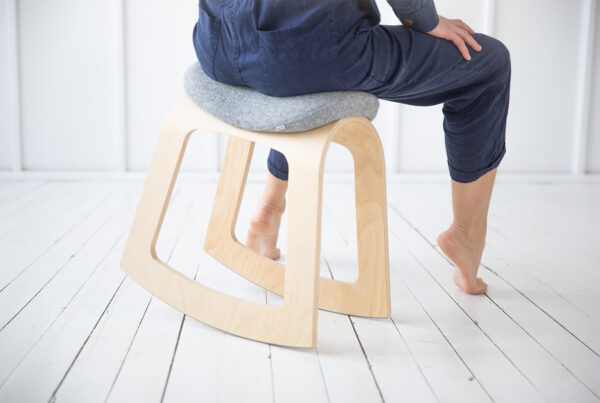
Balance chairs challenge this idea. By introducing controlled instability, they encourage continuous micro-movements and active postural regulation. Instead of forcing stillness, balance chairs work with the body’s natural need to move.
This article explores what a balance chair is, how it works from a mechanical ergonomics perspective, why balance ball chairs are no longer the best solution, and how modern balance chairs are redefining sitting in contemporary work environments.
What Is a Balance Chair and How It Works
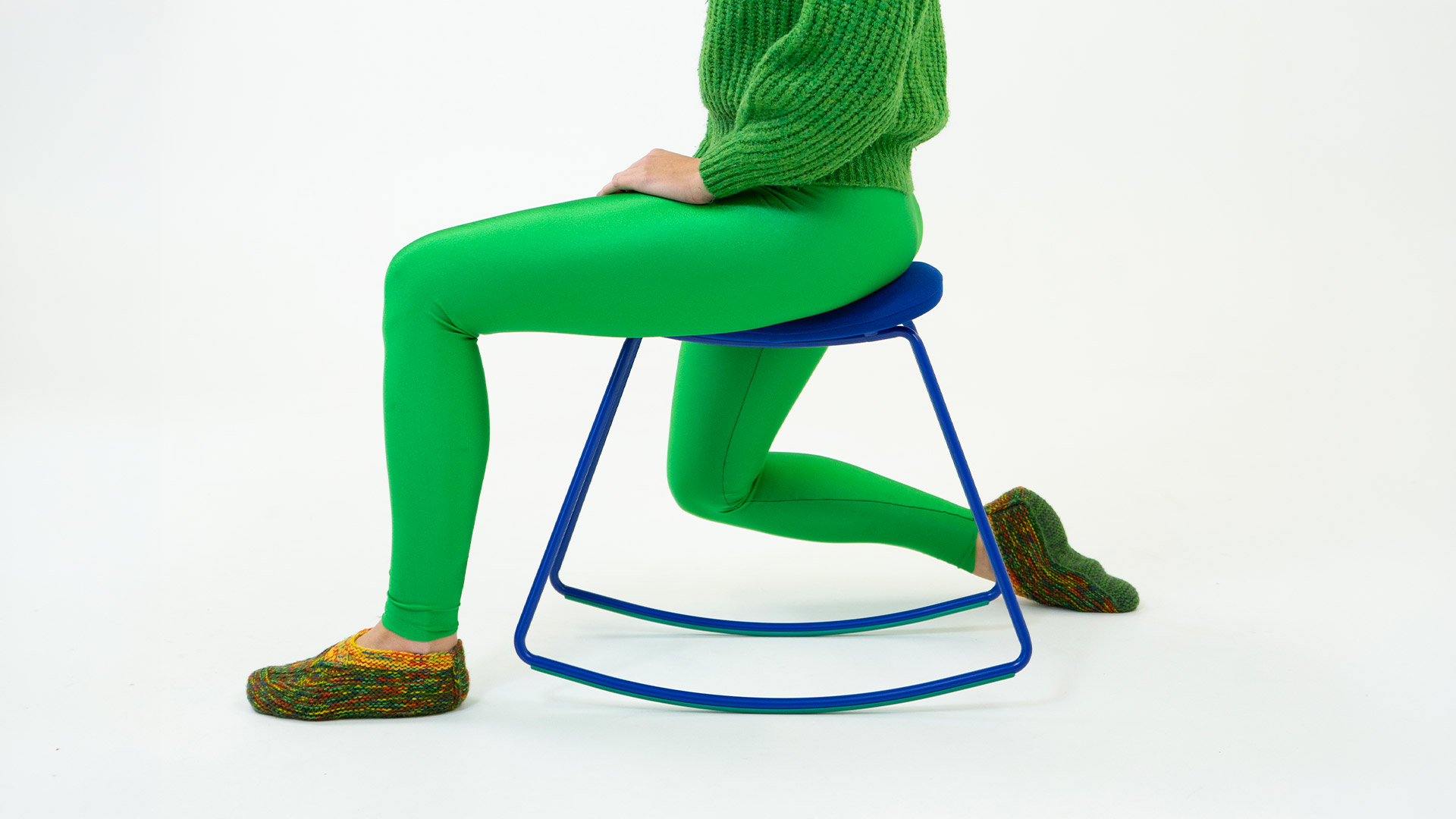
A balance chair is a type of dynamic seating designed to intentionally reduce stability, encouraging continuous micro-movements and active postural control while sitting. Rather than supporting the body passively, it asks the body to participate.
The defining feature of a balance chair is intentional instability. This instability can come from:
- the base
- the seat
- or a mechanical system that allows controlled movement
An ergonomic balance chair promotes active sitting, meaning that when the body shifts, even slightly, it must remain alert and ready to respond. Sitting becomes an active process instead of a passive one.
Below are the key features of a balance chair.
Base of Support
In a conventional office chair, the body’s center of mass (COM) is supported by a wide and stable base, usually with wheels. This wide support keeps the body well balanced and requires very little muscular effort to stay upright, turning sitting into a largely passive task.
A balance office chair modifies this relationship by:
- narrowing the effective base of support
- allowing small displacements of the support surface
- or introducing rotational freedom around one or more axes
As a result, sitting shifts from static load-bearing to a continuous balance task.
Load Distribution
Prolonged static sitting leads to localized stress accumulation and sustained compressive forces on spinal structures. A balance office chair interrupts this process through constant micro-adjustments in joint angles.
This leads to redistribution of forces across spinal segments and reduced stresses on passive structures such as ligaments and intervertebral discs. The goal is not to remove load, but to prevent it from being applied to the same tissues for hours at a time.
Joint Motion
Static sitting restricts natural joint motion. Balance chairs, in contrast, allow continuous variation in pelvic tilt and subtle movement between spinal segments.
A balance chair doesn’t “fix” posture. It changes body dynamics.
In this sense, a balance chair is best understood not as a piece of furniture, but as a mechanical interface that reintroduces movement into sitting.
Key Benefits of Using a Balance Chair
The purpose of balance chairs is to expand movement options during sitting, reducing the harmful effects of prolonged static posture:
- Activation of spine-stabilizing muscles — Instability forces the body to respond continuously, activating small muscles responsible for spinal stability.
- Alleviation of spinal pressure — It may alleviate spinal pressure and reduce musculoskeletal strain. A balance chair engages dynamic sitting behavior that involves regular postural shifts, thus reducing the pressure on the same structures (Alaca et al., 2025).
- Increased energy expenditure (>1.5 METs) — Sitting on an unstable surface subtly engages leg and trunk muscles, increasing muscle activity. Importantly, studies show this does not significantly raise heart rate, meaning movement without extra fatigue (Léger et al., 2022; Alaca et al., 2025).
- Promotion of forward pelvic position — Traditional chairs often encourage a posterior pelvic tilt, increasing lumbar disc loading. Many balance chairs are shaped or angled to support anterior pelvic tilt and natural lumbar lordosis.
Types of Balance Chairs
Balance Ball Chairs
Balance ball chairs entered offices after being borrowed from physiotherapy and fitness environments. At first, they seemed like a simple solution for tired sitters dealing with back pain and stiffness. However, balance ball chairs lack:
- a defined base of support
- adjustability
- task-specific control of instability
- long-term sitting ergonomics
What works well for short rehab sessions does not automatically translate to eight-hour workdays.
Kneeling Balance Chairs
From an evolutionary perspective, kneeling chairs were not true balance chairs, but posture-oriented seating systems. Their primary goal was to influence hip, pelvic, and lumbar alignment (Vaucher et al., 2015).
Later versions introduced movement, but this came at a cost. Kneeling balance chairs increase load on:
- the patellofemoral joint
- the knee joint
- and the tibial tuberosity
While beneficial for some users, they can create new issues for others, especially during long sitting sessions.
Active Balance Chairs
Active balance chairs represent the most advanced stage in the evolution of unstable seating. Unlike balance balls or kneeling chairs, their primary design goal is not maximal instability or enforced posture, but a controlled unstable position that supports continuous micro-movement. A variety of movement options is the key to breaking up static sitting.
The active balance chair is designed to:
- maintain a reduced but predictable base of support
- allow movement without disrupting desk work
- remain practical for long-term office use
Active balance chairs do not aim to fix posture or replace exercise. They aim to restore movement to sitting in a controlled, sustainable way.
The Modern Balance Chair: Stylish, Ergonomic, and Office-Friendly
The modern balance chair has set a high standard to fit in an office environment. Unlike earlier solutions that emphasized maximal instability, such as exercise balls, modern balance chair mechanical and visual designs rely on:
- controlled instability
- low-amplitude movement
- postural variability
All these benefits promote continuous postural micro-adjustments without disrupting focus. Numerous scientific studies support and continue to analyze how different spine movement patterns affect our task performance.
From the visual design perspective, today’s balance chairs usually are:
- visually neutral
- workspace-compatible
- adjustable to individual needs
They’re a perfect combination that functions not as an exercise tool but as a movement-supporting seating system suited for prolonged, focused work.
Why the Muista Balance Chair Is the Upgrade Your Back (and Eyes) Deserve
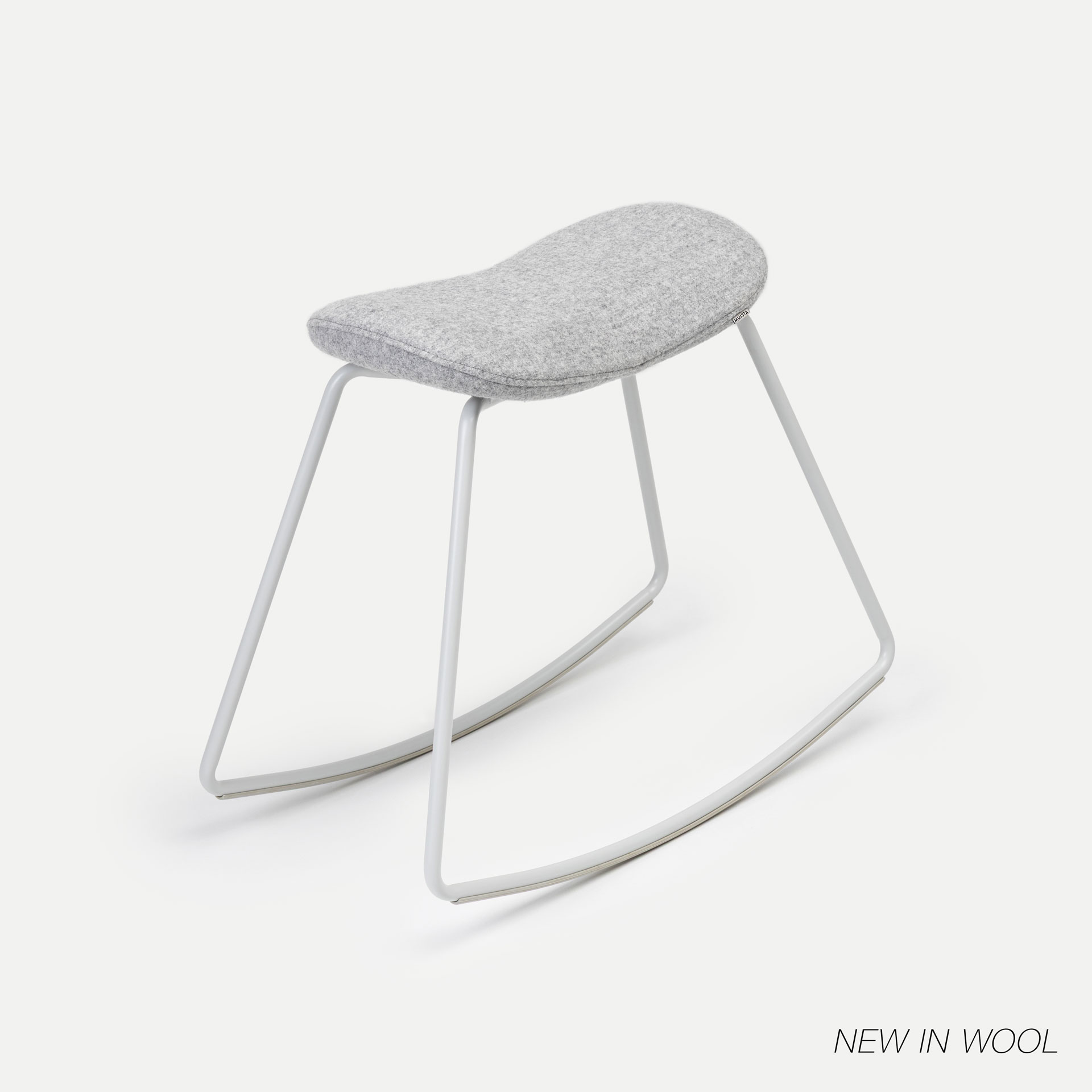
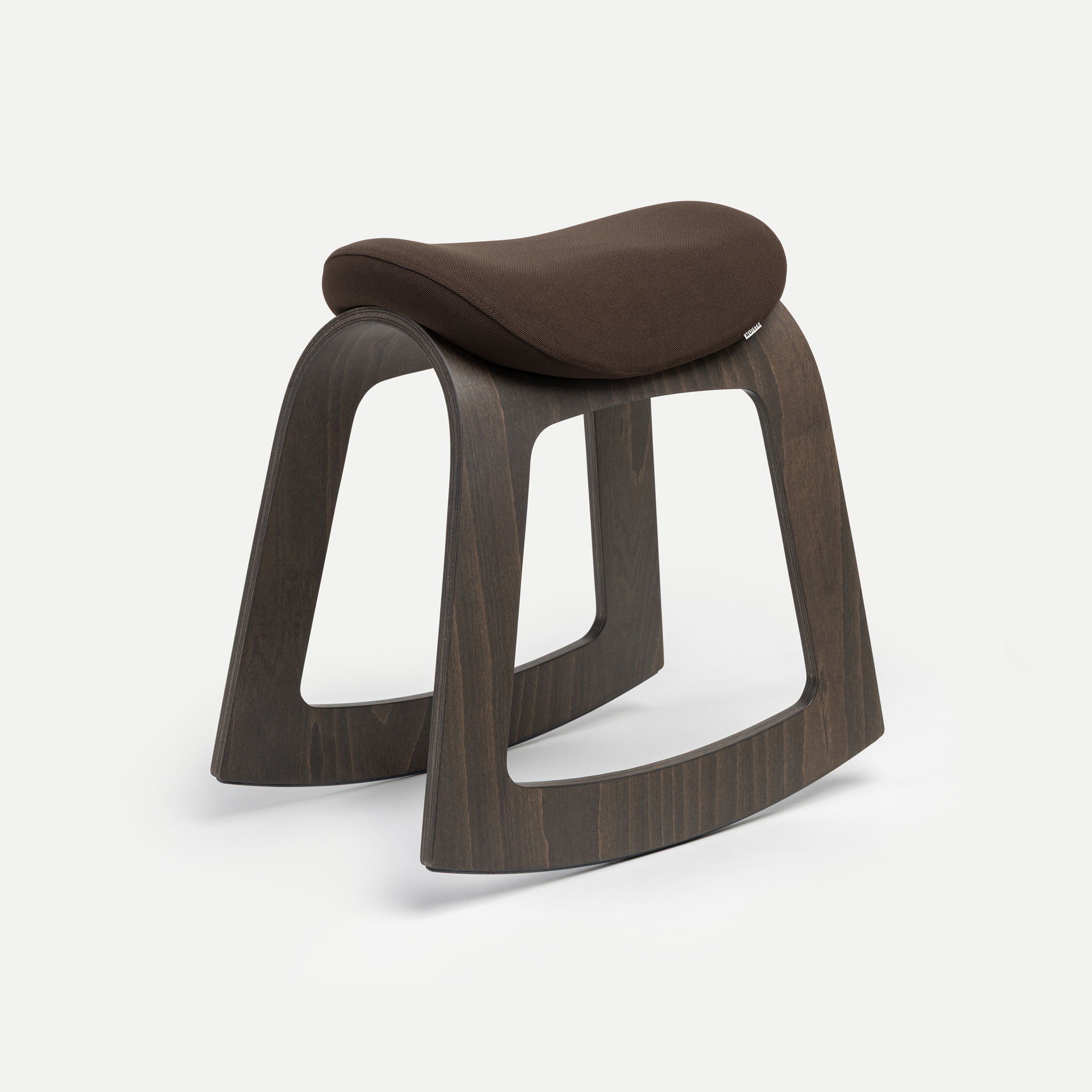
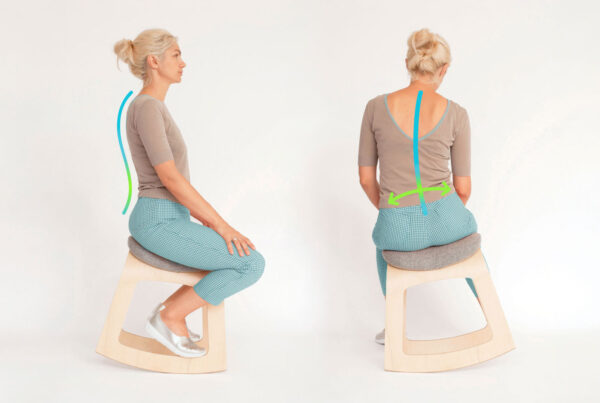
Muista chairs are different from standard or unstable ergonomic chairs, so it is a perfect example. Not many balance chairs can offer two planes of motion, but Muista chairs do with their signature forwards–backwards and side to side moves.
Muista chairs also offer:
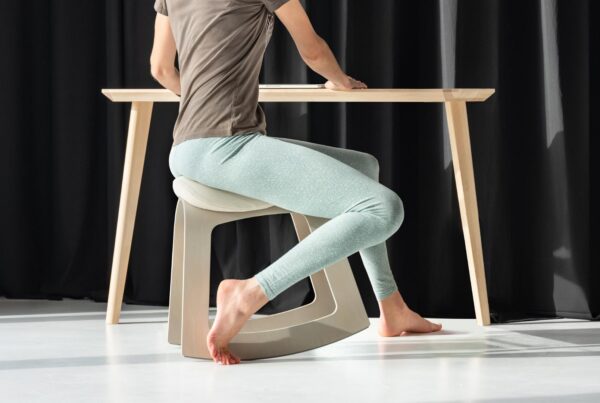
- smooth and natural movements, compatible with office work
- clean, modern design
- easy integration into office or home space
The absence of armrests and a backrest is a conscious design decision: Muista’s ergonomic priority is to support freedom of movement rather than promote over-supported inactivity. By limiting external support, the chair encourages subtle, self-initiated postural adjustments instead of passive sitting.
The only limitation of this chair is the lack of height adjustment possibilities. It is generally well suited to standard-height desks and fully compatible with adjustable sit–stand desks. This design constraint also enables a cleaner, more visually refined form, where aesthetics complement the ergonomic function.
Muista vs. Traditional Balance Ball vs. Kneeling Chairs
Controlled, predictable instability is essential for safety and task focus. Muista and modern balance chairs offer gentle micro-movements, which is a clear advantage over the uncontrolled instability of balance balls.
Compared to kneeling chairs, balance chairs allow neutral spinal and pelvic alignment while encouraging continuous joint motion and postural variability.
Final Thoughts
Balance chairs do not fix posture. They restore variability, adaptability, and movement. Sitting becomes a dynamic interaction between the body and environment. From a mechanical ergonomics perspective, a balance chair does not solve sitting, it changes how sitting behaves.
Author: Ieva Aleknaitė-Dambrauskienė
Editor: Milda Gaigalaite
References:
Alaca, N., Acar, A. Ö., & Öztürk, S. (2025). Low back pain and sitting time, posture and behavior in office workers: A scoping review. Journal of Back and Musculoskeletal Rehabilitation. https://doi.org/10.1177/10538127251320320
Léger, M. C., Cardoso, M. R., Dion, C., & Albert, W. J. (2022). Does active sitting provide more physiological changes than traditional sitting and standing workstations? Applied Ergonomics, 102. https://doi.org/10.1016/j.apergo.2022.103741
Vaucher, M., Isner-Horobeti, M. E., Demattei, C., Alonso, S., Hérisson, C., Kouyoumdjian, P., van Dieën, J. H., & Dupeyron, A. (2015). Effect of a kneeling chair on lumbar curvature in patients with low back pain and healthy controls: A pilot study. Annals of Physical and Rehabilitation Medicine, 58(3), 151–156. https://doi.org/10.1016/j.rehab.2015.01.003