ADHD Desk Chairs to Discreetly Release Your Fidgeting Impulses
If you live with ADHD, you probably know the struggle: sitting still at your desk can feel almost impossible. While traditional office chairs are designed to keep you locked in one “ergonomic” position, your body is asking for movement. Instead of fighting that urge, what if your chair worked with it? ADHD desk chairs are designed exactly for that purpose, helping you release your natural impulses in a discreet, socially acceptable way while staying focused on work.
ADHD in the Workplace: Why Movement Matters
Attention Deficit Hyperactivity Disorder (ADHD) is typically considered a childhood disorder. However, findings identified that it could persist into adulthood in 40–60 % of cases (Perez Custodio et al., 2024). ADHD affects about 3,5% of the global workforce (Truzoli et al., 2022).
There is not much known about how to support adults with ADHD at work. Many studies show that a combination of pharmacological or psychosocial interventions has a positive effect on work outcomes, improving functioning at work. What’s missing? Research on how ergonomic environments, like active or unstable chairs, might help adults with ADHD stay focused and comfortable.
Studies that analyze children with ADHD show that ADHD, which goes with hyperactivity syndrome, has an interesting fact, that activity increases in a low stimulation environment. This compensates for the lack of psychological arousal with additional visual and kinesthetic (body’s sense of movement and muscle activity) input. In other words: when children need to focus on cognitively complex tasks, they start to move and fidget even more than people without ADHD. It is a normal mechanism that explains ADHD.
A study analyzing children with ADHD said that with more intense physical activity, it is possible to strengthen the functioning of cognitive control (Stanić et al., 2022).
Unlike children, symptoms in adults are slightly different. From socially discouraged primitive behaviors such as fidgeting, the adult moves on to complications and failure to excel in school, university, or a job, issues with mental health, periodic injuries and accidents, and restlessness. However, the fidgeting does not leave them; adults learn to mask it. Therefore, we can confidently conclude that greater physical activity, such as sitting on an unstable chair, can not only mask fidgeting but also help people focus on tasks at work.
Why Sitting Still Is Hard for People with ADHD
People with ADHD don’t sit “wrong”, they sit differently. Research shows that children and adults with ADHD often cross their legs on the chair, rock back and forth, or constantly change positions. These are not bad habits; they’re built-in self-regulation strategies.
As cognitive psychologist and ADHD coach Dr. Janina Maschke explains:
“Stimming and fidgeting help regulate sensory input, emotions, and attention. For individuals with ADHD, it’s not a matter of choice—it’s a natural way to focus, manage hyperactivity, and self-soothe.“
“Unfortunately, in many professional settings, fidgeting is seen as unprofessional or distracting. This leads many adults with ADHD to mask their behavior, which over time causes fatigue, stress, or even burnout. Many neurodivergent people who stim feel ashamed or are hyperaware of their stimming behaviour.“
The result? People with ADHD expend more energy trying to look still than actually doing their work.
What Is an ADHD Chair?
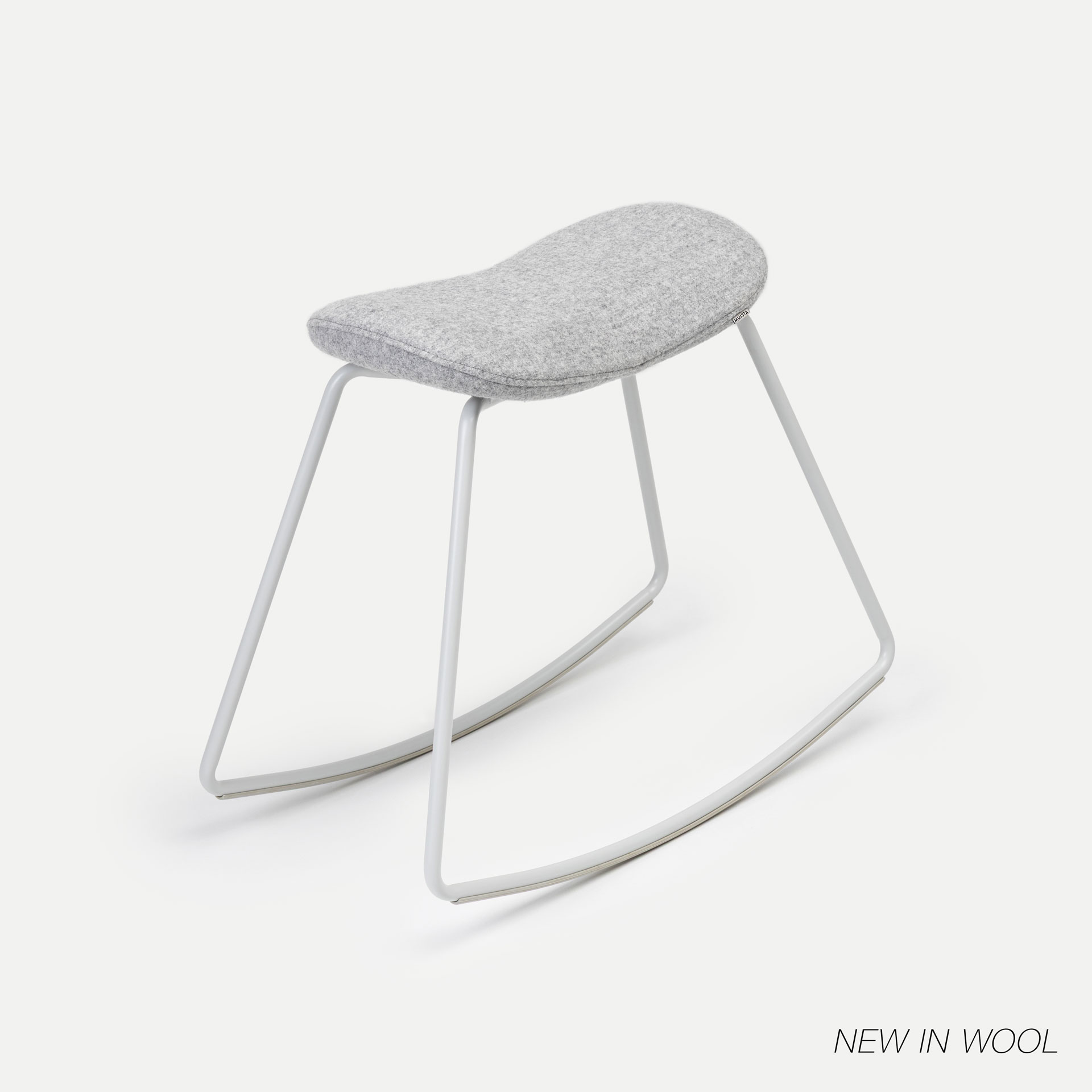
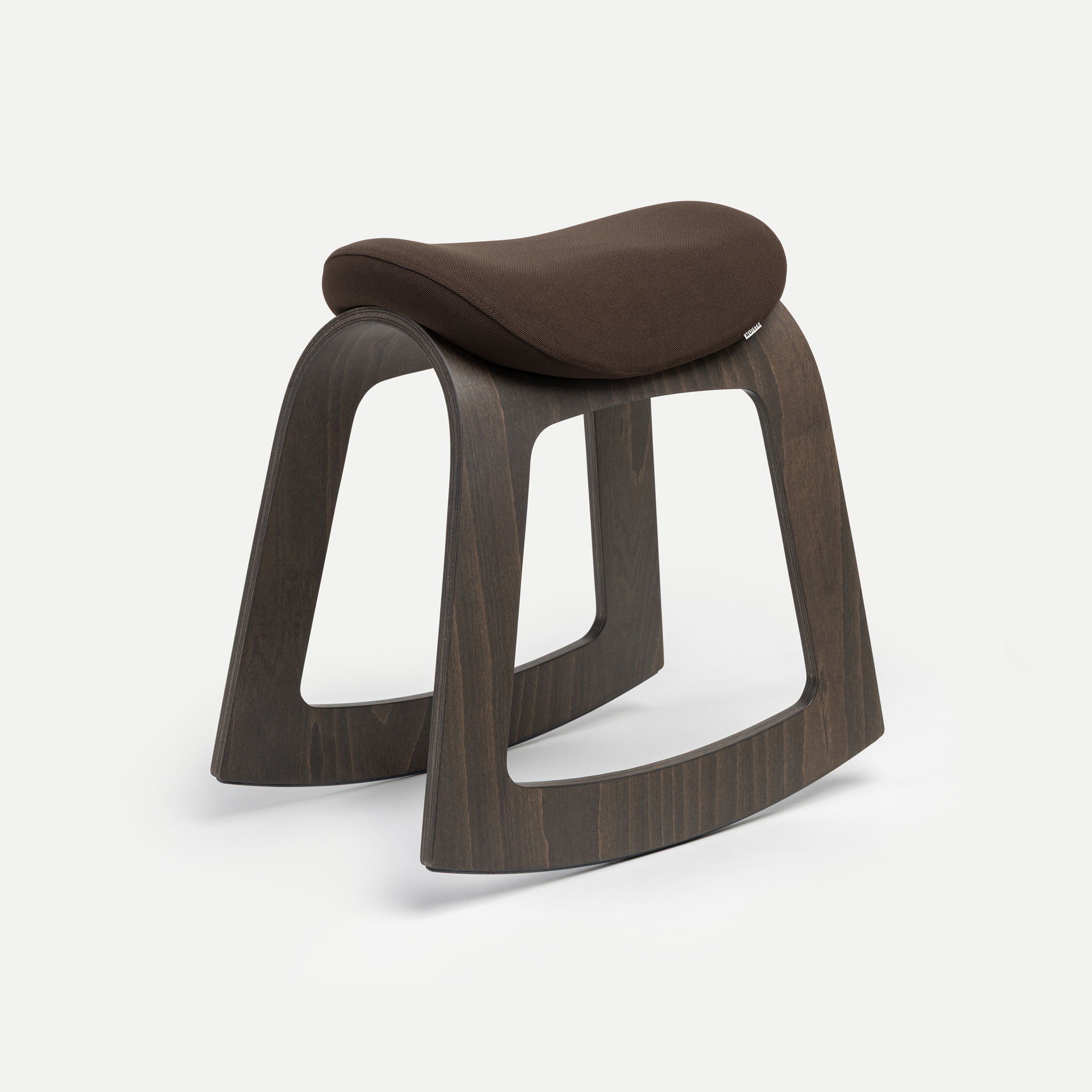
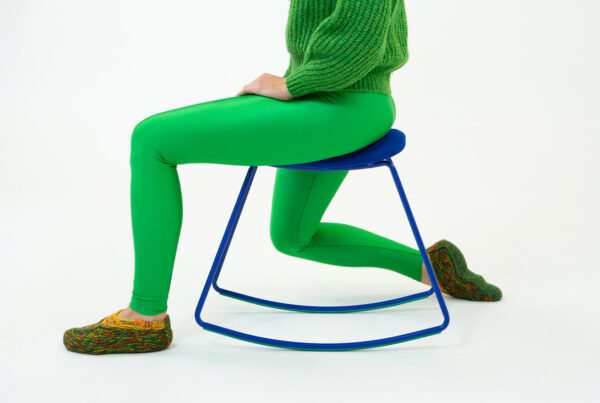
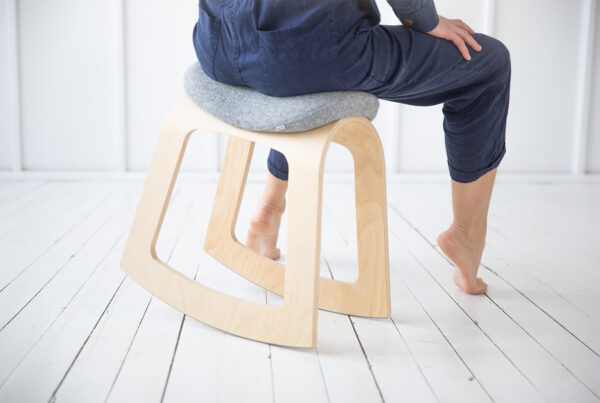
An ADHD desk chair is not a medical device, but an ergonomic tool designed for people who need movement while working. Instead of forcing stillness, these chairs support micro-movements such as rocking or swaying.
Unlike traditional office chairs that focus on comfort through inactivity, ADHD desk chairs create comfort through movement, which can dramatically improve focus, productivity, and overall wellbeing.
The ADHD Way of Sitting
Scientists and medical professionals think that many areas of the brain can be affected by ADHD syndrome, such as the prefrontal cortex, basal ganglia, limbic system, and cerebellum. Hyperactivity, impulsivity, and inattention are caused by deficiencies in these brain areas (Perez Custodio et al., 2024).
Therefore, sitting still becomes a challenge and not a very achievable goal when you have ADHD, as you constantly want to sit cross-legged on your office chair, perched on the edge of the seat, continually bouncing your legs or shifting position, standing up, and pacing during meetings.
These behaviors aren’t distractions, they’re your brain asking for motion. The right chair helps you meet that need in a healthy way.
How ADHD Desk Chairs Help
As Dr. Maschke says: “Rocking chairs can absolutely serve as a more socially acceptable, or even more ergonomically supportive way to meet the need for movement. It is important to remember that stimming is not always a matter of choice; therefore, if someone is forced or encouraged to self-monitor and to stop the stim, it can become overwhelming and exhausting. So offering individuals tools, like a rocking chair, can help individuals to self-regulate without drawing unnecessary attention or having to suppress natural impulses.“
ADHD-friendly desk chairs provide:
- Discreet fidgeting – movement without drawing unwanted attention in professional settings.
- Vestibular input – rocking activates the balance system, calming the nervous system and supporting focus.
- Improved concentration – gentle rocking or swaying helps reduce restlessness so you can stay with a task longer.
- Less masking, more energy – you don’t have to hide your impulses, which lowers daily stress and exhaustion.
As Dr. Maschke notes:
“Rocking offers rhythmic, full-body sensory input that helps regulate the nervous system. It involves vestibular input, which helps with balance and spatial orientation, and can have a calming effect. Rocking can be a smoother and more grounding form of movement than jittery fidgeting.”
Muista’s Unique Approach
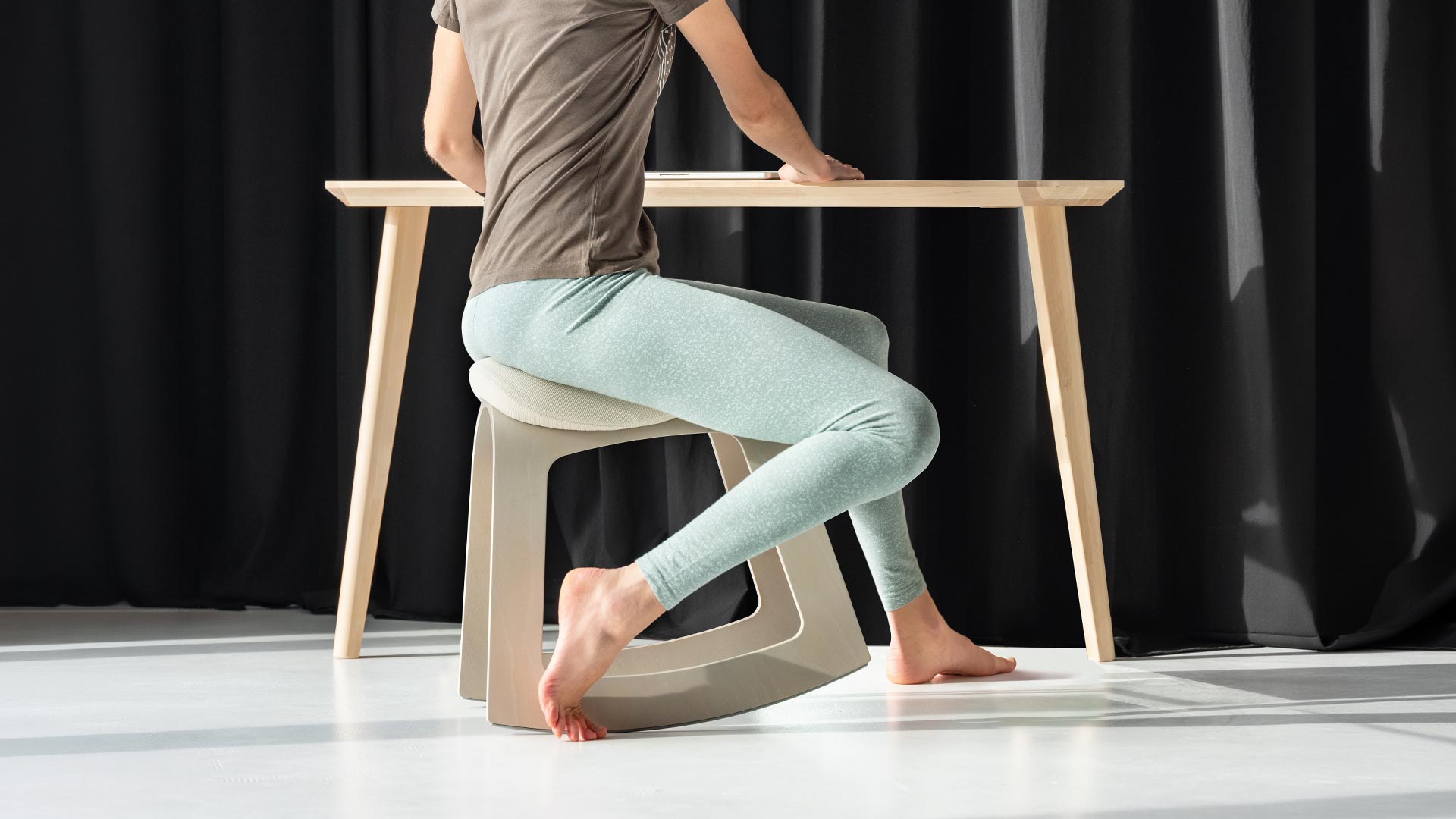
Muista chairs are different from standard ergonomic chairs. Their 2-in-1 design offers:
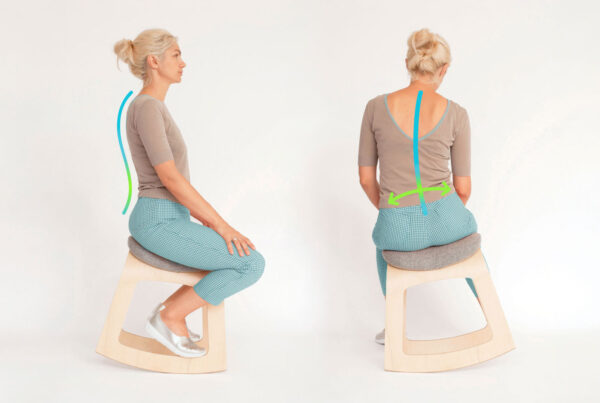
- Two sitting positions (saddle-like and bench-like)
- Two rocking directions (forwards–backwards and side to side)
- Smooth, quiet motion that keeps your hands on the keyboard and your brain in the zone
The philosophy is simple: while most office chairs aim to keep you still, Muista is built for comfortable movement.
Designer Aurimas explains:
“I never felt comfortable on traditional office chairs. I was always fidgeting and trying to hide it. Research showed me that micromovements are actually beneficial. Rocking turned out to be the most pleasant, elegant, and calming way to release fidgeting impulses. That’s how Muista was born.”
Real Experiences from ADHD Adults
Dr. J. Maschke Cognitive psychologist and ADHD Coach, shared her experience with ADHD clients about prolonged sitting.
“Many clients have shared that traditional office chairs feel too rigid or confining. They often struggle with the discomfort of sitting still for long periods and end up shifting constantly, sitting cross-legged, or standing up frequently. Some of my tween and teenage clients have been allowed to use a rocking chair in the classroom, which has really helped them to focus in class and feel less overwhelmed during the school day. Adaptive furniture, like rocking chairs or standing desks, can make a real difference for any age, whether you are in school, university or at work.“
One ADHD adult shared on Etsy:
“My new favorite chair. I have ADHD, and with this chair I can finally sit and work with concentration. It’s beautiful, it arrived quickly, and I’m absolutely thrilled.”
These stories show a simple truth: ADHD desk chairs are not just theory, they work.
Beyond ADHD: Extra Health Benefits
Even if you don’t have ADHD, sitting actively benefits your health:
- Better posture and spinal alignment;
- Reduced stiffness and back fatigue;
- Improved cognitive skills;
- More energy during long desk hours.
Conclusion
For adults with ADHD, sitting still is not the answer, it’s the problem. Traditional chairs force you to fight your body, while ADHD desk chairs like Muista give your body what it naturally needs: movement. The result? Less restlessness, more focus, and a healthier way to work.
Instead of hiding your fidgeting impulses, why not embrace them comfortably, elegantly, and productively?
Author: Milda Gaigalaite
Co-author and scientific editor: Ieva Aleknaitė-Dambrauskienė
References:
Perez Custodio, R. J., Hengstler, J. G., Hoon Cheong, J., Jin Kim, H., Wascher, E., & Getzmann, S. (2024). Adult ADHD: it is old and new at the same time what is it? Reviews in the Neurosciences, 35(2), 225–241. https://doi.org/10.1515/revneuro-2023-0071
Stanić, V., Žnidarič, T., Repovš, G., & Geršak, G. (2022). Dynamic Seat Assessment for Enabled Restlessness of Children with Learning Difficulties. Sensors, 22(9). https://doi.org/10.3390/s22093170
Truzoli, R., Sadek, J., & Lauder, K. (2022). A systematic review of interventions to support adults with ADHD at work—Implications from the paucity of context-specific research for theory and practice.